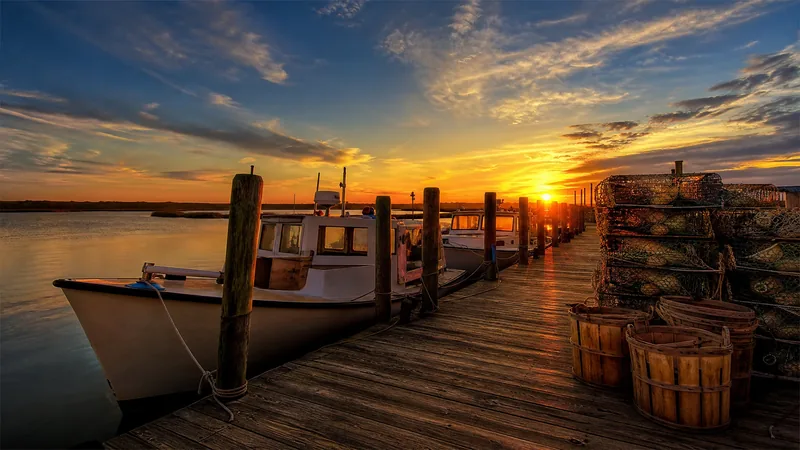
How to Start an Oyster Farm in Maryland: DNR Aquaculture Leases
How to Start an Oyster Farm in Maryland: DNR Aquaculture Leases
Starting an oyster farm in Maryland requires navigating a specific regulatory framework. The Maryland Department of Natural Resources (DNR) manages aquaculture leases through a formal permitting and leasing process. This guide walks you through the requirements, steps, and realistic expectations for establishing a shellfish aquaculture operation in Maryland.
What You Need to Know Before Starting
Oyster farming in Maryland is governed by Natural Resources Article 4-11A. The DNR issues two types of aquaculture leases: submerged land leases and water column leases in designated aquaculture areas. Your operation will require both a lease from DNR and a separate harvester license. These are two distinct permits with separate applications and requirements.
Maryland oyster leases have a standard term of 20 years, giving you a long-term operating window. However, the path to approval involves documentation, lease fees, annual rent, and ongoing compliance with active-use requirements. Ask DNR how long lease review currently takes, since it depends on the completeness of your submission and the complexity of your proposed site.
Materials and Initial Setup You Will Need
Before you apply for a lease, assemble these basics:
- Proposed lease site location (GPS coordinates and acreage)
- Detailed active-use plan showing how you will use at least one-fourth of your leased area each year
- Oyster seed or hatchery contacts (typically 1,000,000 seed per acre per year minimum)
- Lease infrastructure plans (floating bags, cages, or bottom culture methods)
- Proof of site control or landowner permission if the lease borders private property
- Water quality baseline data or commitment to collect it
- Business entity documentation (LLC, corporation, sole proprietorship)
- Proof of compliance with any existing environmental permits or restrictions
You will also need access to capital for the nonrefundable application fee, estimated annual lease rent (which varies significantly by location and lease size), and the aquaculture development surcharge assessed by DNR. See the fee breakdown below.
Step-by-Step Instructions
Step 1: Confirm Your Proposed Site is in an Approved Aquaculture Area
The DNR designates specific areas of Maryland waters where aquaculture leases are permitted. Not all waterways are open. Check the DNR Aquaculture Program page at https://dnr.maryland.gov/fisheries/Pages/aquaculture/ to locate approved aquaculture areas and view the interactive map. Your proposed site must fall within one of these designated zones.
Note the distance restrictions: your lease cannot be within 50 feet of shoreline or an existing pier without written permission from the riparian owner, and it cannot be within 150 feet of a public shellfish fishery area. If your site borders private property or public fishing grounds, you will need to document compliance or obtain written consent before submitting your application.
Step 2: Develop a Detailed Active-Use Plan
The DNR requires an active-use plan as part of your lease application. This plan must demonstrate how you will actively use your leased area. The baseline requirement is to plant seed oysters on at least one-fourth of your lease area each year at a density of at least 1,000,000 seed per acre, unless the DNR specifies different requirements for your particular site or lease type.
Your plan should include: the specific acreage you intend to plant each year, the timing of planting (seasonal or year-round), your source of seed (hatchery or supplier contact), the culture method (bottom culture, bags, cages, or combination), expected grow-out timelines, harvest schedules, and how you will manage the non-planted portion of your lease. The more detailed and realistic your plan, the stronger your application.
Step 3: Understand the Lease Types and Choose Which Applies to You
Maryland offers three main lease types (confirm the current terms with DNR):
- Demonstration leases: Limited to 5 acres maximum, intended for testing new aquaculture methods or proving feasibility. Confirm term and fees with DNR.
- Standard aquaculture leases (submerged land or water column): Any size provided you meet the active-use requirement, with a 20-year term.
- Enterprise leases: Limited to 2 acres and 5 years, designed for short-term aquaculture testing or pilot operations.
If you are testing oyster farming for the first time, a demonstration or enterprise lease may be appropriate. For a full-scale commercial operation, a standard aquaculture lease provides the long-term security you need. Confirm the lease type that fits your business model with the DNR Aquaculture Program before finalizing your application.
Step 4: Gather Required Documentation and Complete the Lease Application
Contact the DNR Aquaculture Program to request the formal lease application and confirm exactly what it requires. Expect to provide items such as:
- Completed lease application form
- Detailed active-use plan
- Site map with GPS coordinates and distances to shoreline, piers, and public fisheries
- Proof of site control (option agreement, deed, or landowner letter if adjacent to private land)
- Business entity formation documents (articles of organization, articles of incorporation, or equivalent)
- Evidence of no outstanding environmental violations
- Water quality baseline data or commitment to collect baseline water samples
The application is submitted to the DNR Fisheries Service. The nonrefundable application fee must accompany your submission. While the exact fee varies, confirm the current amount with the DNR Aquaculture Program before applying.
Step 5: Participate in Public Notice and Comment Period
Once your application is deemed complete, the DNR publishes a public notice in the Maryland Register and local publications. Ask DNR how long the comment period lasts. During it, commercial fishermen, local governments, and the public may comment on your proposed lease. Legitimate concerns about conflicts with existing fisheries or environmental impacts may delay or modify your lease approval. Be prepared to respond to questions or objections raised during this period.
Step 6: DNR Review and the Aquaculture Coordinating Council
The DNR Fisheries Service reviews your application for compliance with state law and reviews it with the Aquaculture Coordinating Council. The Council provides recommendations on aquaculture policy, including input on lease terms, rent, and the aquaculture development surcharge. Ask DNR how long this review takes. You may be asked to provide additional information or modify your plan.
Step 7: Execute the Lease Agreement and Pay Initial Fees
If approved, the DNR provides a lease agreement for execution. The lease specifies your rights to use the designated water area for oyster farming, the 20-year term (or shorter for demonstration and enterprise leases), the annual rent amount, the aquaculture development surcharge, insurance requirements, and conditions for use. Read the lease carefully and consult an attorney if you have questions about any term.
Once signed, you will pay the initial application fee, the first year's annual rent, and the aquaculture development surcharge. The state's OneStop business site lists an estimated annual rent of $15 to $500, but that figure is unverified, so you must confirm the exact rent with the DNR for your specific lease. The aquaculture development surcharge is set by the DNR with the Aquaculture Coordinating Council and varies.
Step 8: Obtain Your Harvester License
The DNR lease covers your right to use the submerged land or water column. To legally harvest oysters, you need a separate harvester license. The types of harvester licenses available and their fees are set by the DNR and may vary based on your harvest method (tonging, dredging, or other). Confirm the license type you need and its current cost with the DNR Fisheries Service. Ask the DNR Fisheries Service about renewal terms.
Step 9: Begin Operations and Maintain Compliance
Once your lease is executed and your harvester license is in hand, you may begin planting and growing oysters. Maintain detailed records of seed planted (date, quantity, source), areas planted, water quality observations, and harvest data. The DNR may conduct periodic inspections to verify you are meeting your active-use obligation. Failure to plant and maintain at least one-fourth of your lease area each year can put your lease at risk, so ask DNR what enforcement applies.
Expected Results and Timeline
Oyster growth in Maryland waters typically takes 18 to 36 months from seed to market size, depending on water temperature, food availability, and your specific growing method. Market-size oysters (3 inches or larger) are ready for harvest when they reach consumer preference for your target market.
Your profitability depends on seed costs, grow-out losses (typically 10% to 40%, depending on disease, predation, and environmental stress), labor, harvesting and processing costs, and market prices. Maryland oysters command premium prices when marketed as local and sustainably farmed. However, disease (particularly MSX and Dermo), poor water quality, and damage from storms are real risks that can impact yield.
The timeline from initial inquiry to first harvest is the lease review period (ask DNR how long it currently takes) plus 18 to 36 months for oyster growth. A 20-acre lease operating at the active-use minimum would plant one-fourth of the area, or 5 acres, each year, which at 1,000,000 seed per acre is about 5 million seed oysters planted each year. How many reach market size depends on mortality and your methods.
Tips and Common Mistakes to Avoid
- Don't skip the site research. A site that looks good on a map may have poor water quality, existing conflicts with commercial fishermen, or environmental restrictions. Visit your proposed site multiple times and talk to local fishermen before committing.
- Do secure an attorney. While this guide explains the general process, each lease negotiation is unique. A Maryland attorney familiar with aquaculture law can help protect your interests.
- Don't underestimate the active-use requirement. Planting one-fourth of your lease area each year is a minimum standard, and seed must be purchased and planted consistently. Budget for this as a recurring operating cost, not an optional expense.
- Do establish relationships with hatcheries or seed suppliers early. Reliable seed supply is critical. Confirm your supplier can provide the quantity and timing you need, especially in peak planting seasons.
- Don't assume all lease areas have equal production potential. Water temperature, salinity, food availability, and disease prevalence vary by location. Sites in the mid-Atlantic Eastern Shore may differ significantly from upper Chesapeake locations.
- Do plan for disease management. Oyster diseases like MSX (multinucleated sphere X) and Dermo affect Maryland waters. Research disease-resistant seed varieties and grow-out strategies for your specific site.
- Don't miss renewal deadlines. Your harvester license and lease terms require timely renewal. Mark your calendar and submit renewal applications well in advance to avoid lapses in your operating authority.
Disclaimer
This article is informational and not legal or tax advice. Oyster aquaculture in Maryland is regulated by multiple state agencies and may involve additional federal requirements under the Clean Water Act or other statutes. Before investing time or money, consult a Maryland-licensed attorney experienced in aquaculture law and a certified public accountant to understand the full legal and tax implications of oyster farming. Contact the Maryland DNR Fisheries Service directly to confirm current fees, lease terms, licensing requirements, and site-specific restrictions.
Next Steps: Resources to Contact
Maryland Department of Natural Resources, Aquaculture Program: Visit https://dnr.maryland.gov/fisheries/Pages/aquaculture/ to view the aquaculture areas map, download the lease application, and find contact information for the Aquaculture Program. Phone the DNR Fisheries Service at the number listed on the website to ask questions about lease types, fees, and your specific site.
Aquaculture Coordinating Council: The Council provides input on state aquaculture policy and lease terms. Information on Council meetings and recommendations is available through the DNR website.
Hatcheries and Seed Suppliers: Research Maryland and regional oyster hatcheries to understand seed availability, cost, and disease-resistance traits before finalizing your active-use plan.
Maryland Attorney General's Office: If you need general guidance on business formation or environmental compliance, the Attorney General's website provides resources for Maryland entrepreneurs and businesses.
Oyster farming is a viable enterprise in Maryland waters, but success requires careful planning, regulatory compliance, and realistic expectations about growth timelines and profitability. Start with thorough research, secure professional guidance, and engage with the DNR early in your planning process.