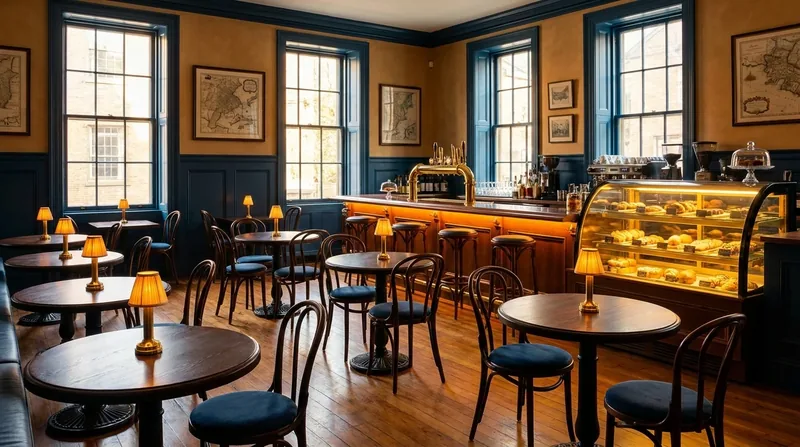
How to Start a Cottage Food Business in Maryland: Rules and the New $100,000 Cap
How to Start a Cottage Food Business in Maryland: Rules and the New $100,000 Cap
Maryland's cottage food law is one of the most entrepreneur-friendly in the country, and as of October 1, 2026, it just got better. The state raised the annual revenue cap from $50,000 to $100,000, making it possible to run a real business from your home kitchen without a food service license, health department inspections, or commercial facility costs.
If you make jams, granola, baked goods, pickles, sauces, or other shelf-stable foods, this guide walks you through exactly how to set up legally and start selling.
What Is a Cottage Food Business in Maryland?
A cottage food business is a home-based food operation that bypasses Maryland's standard food service licensing because it meets specific safety and transparency rules. You make and store foods in your home kitchen, label them clearly, and sell them directly to consumers (door-to-door, farmers markets, online with local pickup, or online shipping within Maryland).
The catch: not all foods qualify, and you must follow Maryland's labeling rules exactly. Do both, and you need no license from the Maryland Department of Health.
The New Maryland Cottage Food Law: $100,000 Cap (Effective October 1, 2026)
Until September 30, 2026, Maryland's statute capped cottage food sales at $50,000 per year. House Bill 535 (Chapter 320 of 2026) raised that ceiling to $100,000 annually, effective immediately on October 1.
This is a material change. If you see old guides citing a $25,000 limit, disregard them; those are outdated. The current law is $100,000 per year, as long as you comply with all other requirements.
Confirm with MDH exactly how the revenue cap is measured before you rely on it.
What Products Can You Make? (And What You Cannot)
Maryland law allows only foods that are shelf-stable and low-risk for foodborne illness. You can make:
- Jams, jellies, and other preserved fruits
- Pickled vegetables
- Dried herb blends and spice mixes (if not roasted in the home kitchen)
- Granola and dry cereal mixes
- Baked goods without cream cheese, custard, or egg-based fillings (bread, cookies, brownies, but not cheesecake or cream pies)
- Dried pasta
- Certain canned goods made with a pH below 4.6
- Infused oils and vinegars, with care around botulism risk (check with MDH or a food safety authority on your specific product)
You cannot make:
- Foods that require refrigeration (sour cream dips, salad dressings with mayo, soft cheeses)
- Canned goods above pH 4.6 without pressure canning (most soups, vegetables, meats)
- Meat or seafood products
- Foods with no pH control (hummus, nut butters without preservatives are often prohibited)
- Foods requiring specialized equipment or monitoring (fermented beverages, for-profit yogurt)
When in doubt, contact the Maryland Department of Health's Food and Hygiene Program or ask your county health department. They will tell you whether your specific product qualifies.
Step-by-Step: How to Start Your Cottage Food Business
Step 1: Verify Your Product Qualifies
Before you buy ingredients, call the Maryland Department of Health or your county health department and describe your product. Ask: "Is this food exempt from licensing under Health-General 21-330.1?" If they say yes, proceed. If they say no or are unsure, ask what would need to change (such as a pH test, a food safety course, or a licensed facility).
Step 2: Check Local Zoning and Home-Occupation Rules
Just because Maryland law allows a cottage food business does not mean your county or city does. Home-occupation ordinances and zoning rules vary widely. Anne Arundel County, for example, has specific rules about home-based food businesses. Baltimore, Prince George's, and other counties each have their own.
Before you begin, call your county or city planning department or zoning office and ask:
- Do your zoning rules allow a home-based food business?
- Do you need a home-occupation permit, and if so, what does it cost?
- Are there restrictions on signage, delivery traffic, or number of customers?
Get the answer in writing or note the staff member's name and date. This is the step most people skip, and it is the one that can stop a business cold if a neighbor complains.
Step 3: Request an MDH Cottage Food Business ID Number
Contact the Maryland Department of Health, Food and Hygiene Program, and request a cottage food business ID number. Ask MDH what it needs from you and how long it takes.
Once you receive your ID number, you may use it on your labels instead of your personal phone and address (though you may also choose to include those). The ID number is issued by MDH on request.
Step 4: Design Your Labels
This is non-negotiable and the most common point of failure. Your labels must include, in English, the following information:
- Product name
- Your name and address, OR your name, phone number, and MDH-issued ID number
- List of ingredients in descending order by weight
- Net weight or volume (e.g., "16 oz")
- A statement: "Made by a Maryland cottage food business not subject to Maryland's food safety regulations." (This exact wording or a similar, clear statement is required.)
If you plan to sell to retail stores later, your labels must also include your phone number, email address, and the date made. Start with that format now to avoid reprinting.
Use a label maker, print on waterproof sticker paper, or hire a print shop. Labels must be legible and stay on the jar or package through shipping and storage. Confirm with MDH whether handwritten labels are acceptable before you rely on them.
Step 5: Prepare Your Home Kitchen (Food Safety Basics)
You do not need a separate commercial kitchen, but you do need a clean, organized workspace. The Maryland Department of Health does not inspect home kitchens, but if you are selling to the public and a customer gets sick, you will be liable. The low-cost way to protect yourself and your customers:
- Designate a shelf or cabinet for your ingredients and packaging materials. Keep them separate from household items.
- Use clean utensils, pots, and jars. Wash thoroughly after each batch.
- Keep a production log: what you made, when, which batch, where it was stored. This helps you trace product if there is ever a recall.
- Store finished product in a cool, dry place away from direct sunlight (a closet, pantry, or basement shelf is fine).
- If your recipe is new to you, test pH (for pickles, jams, and sauces with acid) using pH strips or a meter. Ensure it falls into the safe range for your product type.
Step 6: Start Selling
Direct to consumers means:
- Farmers markets
- Farm stands or your own home stand (with zoning approval)
- Online sales with local pickup or shipment within Maryland
- Door-to-door sales (though local rules may restrict this)
- Churches, schools, or community organizations you supply directly
Sales to a retail food store have extra requirements, and sales to restaurants or wholesalers should be cleared with MDH first. (See "Scaling to Retail" below if that is your goal.)
Can You Sell to Retail Stores? (Scaling Your Business)
If you want to sell your product to grocery stores, boutique shops, or restaurants, Maryland law lets a cottage food business sell to a retail food store only after it submits proof of an MDH-approved food safety course and its label to MDH. If you go beyond the cottage food rules, for example by selling to restaurants or wholesalers, ask MDH which of the following may apply:
- A commercial or shared-use licensed kitchen (a commercial facility, a church kitchen licensed for food service, or a rented commercial kitchen space)
- A food service facility license (ask MDH or your county health department)
- Regular inspections by the health department
- Proof of completion of an MDH-approved food safety course
Before selling to a retail food store, submit proof of an MDH-approved food safety course and your label to MDH. Retail labels must include your phone number, email, and date made in addition to the direct-sale label elements.
The On-Farm Home Processing License (A Different Path)
Maryland also offers an On-Farm Home Processing license for certain products made from farm-grown ingredients (such as value-added crops). This license has a separate revenue cap, listed in some secondary sources as $40,000 per year, but this figure is unverified. House Bill 989 of 2025, which would have modified this cap, was withdrawn by its sponsor and did not pass.
If you grow your own fruit or vegetables and want to process them, this license may be an alternative to the cottage food exemption. Confirm the current revenue cap and eligibility with the Maryland Department of Health before choosing this path.
Common Mistakes to Avoid
Selling to businesses without checking the rules. The cottage food exemption is built around direct sales to consumers. Selling to a retail food store requires proof of an MDH-approved food safety course and your label to be submitted to MDH first, and sales through distributors, wholesalers or restaurants should be cleared with MDH before you start.
Incomplete or inaccurate labels. Missing ingredients, no address or ID number, or missing the "not subject to Maryland food safety regulations" statement makes your product non-compliant. Keep a template on file and use it consistently.
Ignoring county zoning rules. A neighbor's complaint to zoning enforcement can halt your business overnight. Verify you have zoning approval before you make your first sale.
Making products that are not shelf-stable. If your product requires refrigeration or has a short shelf life, it likely falls outside the exemption. Check with your county health department if you are unsure.
Exceeding the $100,000 annual cap. Once you hit $100,000 in gross revenue for the calendar year, you are outside the cottage food rules, so confirm with MDH what licensing applies. Track sales carefully and plan ahead.
Poor pH control in acidic products. If you make pickles, jams, or sauces, use tested recipes and confirmed pH levels. Botulism from improper canning is rare but serious. When in doubt, use tested recipes from the National Center for Home Food Preservation or Ball canning guides.
Expected Results and Timeline
Ask MDH how long an ID number takes and ask your county how long any zoning or home-occupation approval takes. Once those are settled, you can begin selling.
Revenue growth depends on your product, your marketing, and your capacity to produce in a home kitchen. Results vary widely, and a business that outgrows the cap or wants to sell beyond the cottage food rules should talk to MDH about licensing.
Key Contacts and Resources
Maryland Department of Health, Food and Hygiene Program: Call to request your MDH cottage food business ID number and get clarification on whether your product qualifies. Locate your county health department's phone number on the MDH website.
County Planning or Zoning Office: Confirm your home-occupation rules before you begin. The process varies by county.
National Center for Home Food Preservation: Consult tested recipes and canning guidelines if you are making preserved foods. Homemade recipes can have safety issues; tested recipes do not.
Maryland State Department of Assessments and Taxation (SDAT): If you form an LLC or register a trade name, file through Maryland Business Express at https://egov.maryland.gov/businessexpress.
Should You Form an LLC or Operate as a Sole Proprietor?
A sole proprietorship is the simplest way to start. You register a trade name with SDAT if you operate under a name other than your own (such as "Jane's Jams" instead of "Jane Smith"). The cost is $25 for a standard registration or $75 total with the $50 expedite fee.
An LLC offers liability protection and a more formal business structure. It costs $100 to file with SDAT and requires annual reporting ($300 per year). If you plan to grow to the $100,000 cap, an LLC is worth the cost for liability separation from your home and personal assets.
Whichever structure you choose, consult a Maryland business attorney or CPA about tax obligations. Cottage food business income is taxable, and depending on your total household income, you may owe self-employment tax and state income tax.
Important Disclaimer
This article is informational and does not constitute legal or tax advice. Cottage food laws, zoning regulations, and tax treatment vary by location and change over time. Before you begin, consult a Maryland business attorney and your county health department to ensure you understand your specific obligations. The rules described here are accurate as of October 2026, but laws and guidance can change. Always verify current requirements with the Maryland Department of Health and your county before starting your business.
Starting a cottage food business is one of the most achievable ways to launch a food brand from home. The Maryland law is clear, the process is straightforward, and the $100,000 revenue cap gives you real room to build. Follow the steps, get your labels right, and start selling.
Keep exploring: related Maryland guides
- How to Start a Coffee Shop Business in Maryland
- How to Start a Food Truck in Maryland
- How to Start a Catering Business in Maryland
- How to Start a Food Truck in Baltimore City
- Maryland Liquor License
- How to Start an LLC in Maryland
- Maryland Business License
- How Much Does It Cost to Start a Business in Maryland
- All Maryland business types
- Every Maryland guide in one place