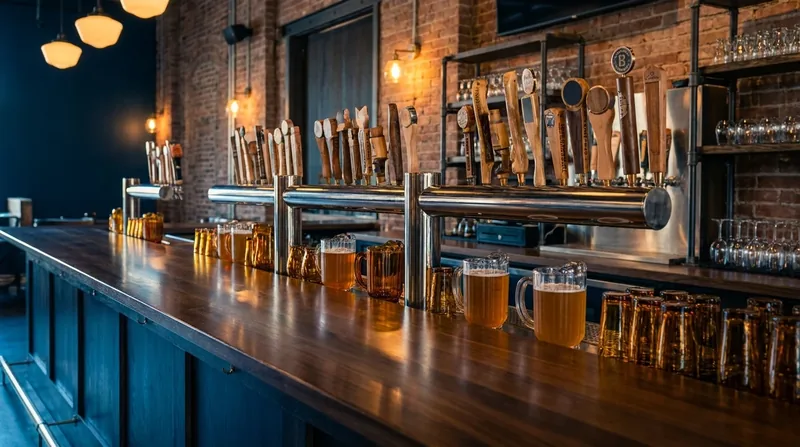
How to Open a Bar or Tavern in Maryland: Class B License and Local Board Process
How to Open a Bar or Tavern in Maryland: Class B License and Local Board Process
What You Need to Know Before You Start
Opening a bar in Maryland requires a Class B liquor license: an on-sale permit issued by your county or local liquor board. The Class B designation means customers drink on your premises. This is not a simple filing. You will navigate a local public hearing process, the Maryland Alcohol, Tobacco and Cannabis Commission (ATCC) as the state-level regulator, and specific requirements that vary by jurisdiction. Budget time and money accordingly.
The good news: Maryland has a clear process. The challenge: every county and city liquor board operates independently, so fees, timelines, and protest procedures differ. There is no one-size-fit-all answer. This guide walks you through the general steps, then tells you exactly where to confirm the specifics for your location.
Eligibility: Who Can Get a Class B License
Maryland law sets baseline requirements for bar owners:
- Age: You must be at least 21 years old.
- Citizenship or residency: Confirm with your local liquor board; some jurisdictions require Maryland residency or citizenship.
- Character: You cannot have certain felony convictions (details vary by board).
- Ownership: The owner or a responsible manager must be present during operating hours in most jurisdictions.
- Location: Many boards apply distance rules from schools, churches and other licensed premises (confirm the rule with your local board).
- License caps: Some counties have a cap on the total number of Class B licenses issued. For example, Prince George's County reportedly has a limit of 215 licenses, but you should verify this with the county liquor board before pursuing an expensive build-out.
Before you sign a lease, call your local liquor board and ask: "Is there a cap on Class B licenses in this jurisdiction, and if so, are any available?" A full waitlist means your application will be denied, no matter how solid your plan.
Step 1: Locate and Contact Your Local Liquor Board
The Maryland ATCC does not issue Class B licenses directly. Your county or city liquor board does. The ATCC oversees state policy and holds local boards accountable, but application, hearing, and issuance happen locally.
Find your board:
- Baltimore City: Baltimore City Liquor License Board.
- Baltimore County: Board of Liquor License Commissioners for Baltimore County.
- Montgomery County: Montgomery County Alcohol Beverage Service (ABS).
- Prince George's County: Prince George's County Board of License Commissioners.
- Other counties: Search "[Your County] Maryland liquor license" or "[Your County] Alcohol Beverage Board."
Contact your board in writing or by phone. Ask for:
- Current Class B application fee.
- Annual renewal fee and when it is due.
- Required documents for application.
- Public hearing procedure and typical timeline.
- Any local restrictions (distance from schools, churches, other bars).
- License quota or waitlist status.
Request an application packet. Some boards provide detailed written checklists; others hand you a basic form and expect you to ask questions. Either way, get everything in writing so you have no surprises.
Step 2: Prepare Your Application Materials
Class B applications are not quick. Expect to submit:
- Completed application form: Filled out in full with owner/manager names, background, and proposed operating hours.
- Proof of ownership or lease: A signed lease or deed showing you control the location. Many boards require the lease to be for at least two to five years.
- Building plans or floor layout: A scaled drawing showing the bar layout, exits, and restroom facilities. Include square footage.
- Proof of liability insurance: Liquor liability insurance, often required at $1 million or more in coverage. Get a quote from your insurer before submission.
- Personal history: Background information on the applicant (owner/manager). Some boards require fingerprint clearance through the Maryland State Police.
- Financial documentation: Proof you have the funds to operate (bank statements, business plan, or loan approval).
- Community letters: Some boards encourage or require letters of support from neighbors. Knowing your neighbors helps.
- List of nearby schools and churches: Proof of compliance with distance requirements.
Boards also want to know: What is your business model? Will you serve food? Will you have a kitchen, or just snacks? How many seats? What kind of bar (neighborhood tavern, craft cocktail, sports bar)? The more detail, the better your application looks.
Step 3: Submit Your Application to Your Local Board
Submit your complete application to your local liquor board by the method they specify (in person, by mail, or through an online portal). Include proof of payment for the application fee. Fees vary widely:
- Baltimore City: As of 2019, Baltimore City charged about $600 for a Class B application, with an annual renewal of approximately $1,320. These figures are dated: confirm current fees with the Baltimore City Liquor Board.
- Other jurisdictions: Call ahead; fees vary by location and license type.
When you submit, ask: "When will the public hearing be scheduled?" Timing varies by board. Get the date in writing.
Step 4: Public Hearing and Community Feedback
After submission, your local liquor board schedules a public hearing. Hearing and protest procedures vary by board, so confirm yours. At a hearing:
- You present your case: Explain your business plan, your qualifications, and why your bar will be a responsible neighbor. Bring documents: your lease, your management plan, your commitment to preventing underage drinking and excessive noise.
- Community members can protest or support: Neighbors, rival bar owners, or community groups can voice objections. Common complaints include noise, parking, rowdiness, or impact on the neighborhood. If your location is contested, be prepared to address concerns head-on.
- The board votes or defers: Some boards vote immediately; others take testimony and vote later. You will be notified in writing of the board's recommendation or decision.
How to prepare: Attend a hearing before yours (boards hold them regularly) to see the process. Invite supportive neighbors or business partners to your hearing. Bring a written statement and have it memorized. Be calm, professional, and respectful of objections.
Common mistakes: Arguing with protesters, dismissing neighborhood concerns, or missing your hearing date. Treat the process as serious, because it is.
Step 5: Confirm Any Remaining Approvals With Your Board
Class B licenses are issued by your local board. After the hearing, ask the board what must happen before the license issues, including any inspections, additional approvals or state-level sign-offs, and how long each takes. The ATCC is the state-level regulator and lists the local boards on its website.
Do not assume a fixed state review period. Confirm the sequence and timing with your local board in writing.
If you have any criminal history, out-of-state license issues, or prior liquor-law violations, disclose them upfront and ask your board how they are reviewed.
Step 6: Receive Your License and Begin Operations
Once your local board issues your Class B license, you receive it. This is a physical permit that must be displayed in your bar. Do not begin serving alcohol until you have the license in hand.
Before opening day:
- Train your staff on age verification and responsible service.
- Install the signage your board requires, including your license display.
- Confirm liability insurance is active and covers your specific location.
- Schedule a final inspection with your local board (some require this).
Your license comes with specific operating conditions: allowed hours (often 6 a.m. to 2 a.m., but varies), whether you can have a pool table or live music, and other rules. Violating these conditions can result in fines, suspension, or revocation. Read the license carefully.
Costs: Budget for Licensing and Setup
Class B licensing fees are only part of your bar startup cost. Here is a realistic breakdown:
- Application fee: varies by jurisdiction (Baltimore City was about $600 in 2019; confirm current fees with your board).
- Annual renewal fee: varies by jurisdiction (Baltimore City was about $1,320 per year in 2019; confirm current fees with your board).
- Liquor liability insurance: $500 to $2,000 per year, depending on your bar size, location, and business model.
- Lease or property purchase: Highly variable; this is often your largest upfront cost.
- Build-out and equipment: Counter, taps, coolers, glassware, POS system, and kitchen equipment: $20,000 to $100,000 or more.
- Initial inventory: Spirits, beer, wine, mixers: $5,000 to $15,000 depending on your bar size and opening day stocking levels.
- Legal and consulting fees: An attorney familiar with local liquor law can cost $1,000 to $5,000, but the investment pays off if you avoid costly mistakes.
Total startup cost for a modest bar: $50,000 to $200,000 or more. Licensing is a small slice of this budget, but it is a critical gating factor: do not sign a lease or order equipment until you confirm the license is achievable.
Timeline: Plan for Several Months
A typical Class B licensing timeline:
- Weeks 1 to 2: Contact your local board, request application packet, confirm quota status.
- Weeks 2 to 6: Gather documents, prepare application, secure lease and insurance quotes.
- Week 6: Submit application and fee to local board.
- After submission: Local board schedules and holds the public hearing (timing varies by board).
- Next: Complete any remaining approvals your board requires.
- Last: License issued; you can begin serving alcohol.
This timeline assumes no objections and no missing paperwork. Contested hearings, criminal history review, or incomplete applications can add months. Plan conservatively and do not commit to a grand opening date until your license is in hand.
Tips and Common Mistakes
Do:
- Start early: Call your local board before you sign a lease. Confirm the license is obtainable.
- Know your audience: Attend a public hearing before yours. Understand the board's priorities and style.
- Go to the hearing prepared: Bring documents, have a one-minute summary ready, and dress professionally.
- Build community support: If your location is residential or contested, get neighbors on your side early. One supportive letter outweighs a dozen objections.
- Follow rules to the letter: Operating hours, seating capacity, insurance coverage, staff training, on-premise consumption only. Violations can cost your license.
- Renew on time: Mark your calendar. Missing a renewal deadline can result in a lapse, fines, or forced closure.
Don't:
- Skip the public hearing process: Some applicants try to avoid the hearing or downplay its importance. The board will note this. Attend and engage.
- Misrepresent your business plan: If you say you are opening a family restaurant with a small bar, and then open a dance club, expect complaint and board action.
- Ignore distance rules: If your location is too close to a school or church, your application will be denied. Measure and confirm before you bid on the space.
- Assume fees won't change: The fee you are quoted today may not be the fee you pay next year. Budget for increases.
- Forget liability insurance: Liquor liability claims are common and expensive. Carry adequate coverage from day one.
When to Consult a Professional
An attorney licensed in Maryland and familiar with liquor law can guide you through application, hearing preparation, and compliance. This is worth the investment if:
- Your location is contested or near sensitive areas (schools, residential blocks).
- You have any criminal history or prior license issues.
- Your application is complex (e.g., you are also seeking a catering or performing-arts license; confirm current requirements with your local board).
- The board's application packet is unclear or contradicts information from the ATCC.
A CPA or accountant familiar with bar operations can also advise on business structure, tax withholding, and inventory management. These are separate from licensing but critical to long-term success.
Legal Disclaimer
This article is informational only and is not legal or tax advice. Liquor licensing laws vary by county and city in Maryland, and requirements change. Fees and timelines cited here, especially those marked as dated, must be verified with your specific local liquor board before you rely on them. Treat this guide as a roadmap, not a guarantee. Consult a Maryland attorney and a local board representative before investing significant money or time in your bar project.
Key Resources
- Maryland Alcohol, Tobacco and Cannabis Commission (ATCC): State-level regulator and resource for local board contact information. Confirm the current URL with a web search, as state agency links change.
- Your local liquor board: Call or visit in person. This is your single most important resource. They answer jurisdiction-specific questions no state website can.
- Local chamber of commerce or small business association: May provide connections to attorneys and experienced bar owners in your area.
Opening a bar in Maryland is achievable, but it requires patience, precision, and respect for the regulatory process. Start your research now, confirm the license is available and obtainable in your location, and budget time as well as money. A thorough approach upfront will save you thousands of dollars and months of delay later.
Keep exploring: related Maryland guides
- How to Start a Bakery Business in Maryland
- How to Start a Brewery, Winery or Distillery in Maryland
- How to Get a Liquor License in Baltimore City
- How to Start a Catering Business in Maryland
- Maryland Liquor License
- How to Start an LLC in Maryland
- Maryland Business License
- How Much Does It Cost to Start a Business in Maryland
- All Maryland business types
- Every Maryland guide in one place